Logo with the words Momberger Airport Information in blue and gray, featuring a silhouette of an airplane above the text and a trail of dots below the word Airport.

ACI World is delighted to offer a selection of stories from the Momberger Airport Information (MAI) newsletter, a trusted, independent source of news, market intelligence, and data for airport professionals around the world since 1973.

Sign up for a free, two-month trial by clicking the button below. Please type "trial" in the user instructions window.

DIGEST FROM ISSUE NR. 1261, PUBLISHED ON 2 FEBRUARY 2026

Airport Development (DEV)

Europe

DENMARK
Billund Airport has approved investment in a new air cargo and cross-docking facility as part of the first phase of its planned Airport City development. The airport will invest DKK 80 million (USD 11.6 million) in an 8,700 m2 facility with 54 truck docks, developed in partnership with HT Transport, a Danish road logistics company, to expand handling capacity alongside existing cargo operations.
Construction is scheduled to begin in spring 2026 with completion targeted for Q2 2027, supporting cargo volumes approaching 90,000 tonnes annually and forming the initial stage of a wider logistics and commercial development programme at the airport.


FRANCE
Marseille Provence Airport is preparing a major transformation of Terminal 2 as part of its medium-term infrastructure investment programme. The airport handled 11.3 million passengers in 2025, representing 1% growth compared with 2024, while aircraft movements declined by 1.1%. Low-cost carriers operating from Terminal 2, including Ryanair, Aer Lingus and easyJet, account for around 40% of total airport activity.
Airport operator Aéroport Marseille Provence plans to invest EUR 300 million between 2026 and 2030, equivalent to approximately USD 325 million. The programme includes further compliance works at Terminal 1 and a comprehensive modernisation of Terminal 2, which is approaching capacity limits in its passenger areas.
The Terminal 2 project will include expansion of the check-in hall, additional baggage drop facilities, increased circulation and waiting space, and new retail and food and beverage areas. Biometric self-service processing is also planned, alongside architectural changes intended to increase natural light within the terminal.
A tender for the Terminal 2 redevelopment is scheduled for the first quarter of 2026, with contractor selection expected by the end of the year. Construction is planned to begin in 2028, with completion targeted for 2031. Long-term plans include adding a boarding pier to Terminal 1.


TÜRKİYE (TURKEY)
Trabzon (Trabzon Province) has now been formally included in Turkey’s 2026 national investment programme, confirming state budget allocation for the planned new airport project. The inclusion was published by the Presidency of Strategy and Budget as part of the 2026 Investment Programme, marking the first official confirmation of central government funding for the project.
The programme assigns a total budget of TRY 68.98 billion (USD 2.4 billion) for the construction of the new airport. Detailed technical parameters, including runway configuration, terminal size and planned passenger capacity, have not yet been disclosed and are expected to be announced by the responsible authorities at a later stage.
The listing places the Trabzon New Airport within the government’s priority transport infrastructure projects for the 2026 budget period.

Russia & C.I.S.

RUSSIA
Bratsk Airport (Irkutsk Oblast) is preparing for the development of a new passenger terminal as part of a wider programme of airside and landside upgrades. SibAero, an aviation infrastructure design company, is developing the project for a new terminal to replace the existing building, dating from 1969, which currently has a processing capacity of 250 passengers per hour. The airport is located approximately 8 km from the city of Bratsk and serves scheduled flights to Moscow, Irkutsk, Novosibirsk and Sochi.
During 2025, the airport commissioned a new apron and a new emergency and rescue service building. Further works planned for 2026 include reconstruction of the stormwater drainage system, refurbishment of a taxiway and replacement of runway lighting systems.
Passenger traffic in 2025 declined by 5% to 246,100 passengers, primarily due to a reduction in services to Moscow, while load factors on S7 Airlines flights remained high. Bratsk Airport is operated by Siberian Airports, an airport management company that also manages Novokuznetsk Airport and Krasnoyarsk Airport.


ARMENIA
Yerevan Zvartnots International Airport has confirmed a target completion year of 2033 for the construction of its planned second passenger terminal. The timeline was disclosed during government discussions on extending the airport concession held by Corporación América S.A., an international airport operator, which also covers Shirak Airport. The concession has been extended until 31 December 2067.
The second terminal forms part of the airport master plan that has been under implementation since 2023, alongside wider modernisation of passenger and cargo infrastructure. The approved investment programme totals USD 425 million across both airports.
Amendments to the concession agreement introduce annual tariff adjustments linked to inflation, remove provisions on guaranteed returns and automatic extensions, and require state approval for any change in controlling ownership of the concessionaire.
The government stated that the updated framework is intended to support long-term capacity growth without additional burden on the state budget. More reporting on the concession extension in the MGT module.

North America

UNITED STATES
Multiple design and financing concepts have been submitted to the US Department of Transportation for a potential redevelopment of Washington Dulles International Airport (Virginia) following a federal request for information issued in December 2025. The non-binding submissions were invited after the department sought ideas for rebuilding and modernising the airport, including options to preserve much or all of the main terminal designed by architect Eero Saarinen, which opened in 1962. The solicitation also requested alternatives to the airport’s long-standing mobile lounge passenger transport system.
More than half a dozen proposals were received and will be forwarded to the Metropolitan Washington Airports Authority, the public body that operates the airport under federal lease, for review and possible sponsorship.
Several proposals retain the Saarinen terminal for non-departure functions, including conversion into concession space or a museum, while constructing new terminal facilities elsewhere on the airport site. Concepts include new terminals located in front of the existing building, on undeveloped land south of the airfield, or between active runways, alongside new pier or midfield gate layouts.
One submission from Bermello Ajamil & Partners, an aviation architecture firm owned by Woolpert, working with Zaha Hadid Architects, proposed a new terminal structure incorporating a large arch-shaped design. The concept places ticketing and baggage processing in the new facility while repurposing the existing terminal for retail uses.
Other submissions came from infrastructure and engineering firms, including Ferrovial Group together with Grimshaw Architects, AECOM Technical Services, Phoenix Infrastructure Group with Ironbridge P3 Infrastructure, Tikehau Capital North America, Studio Tinari, Fengate Capital Management with AltitudeX Aviation Group, and Global Infrastructure Partners in partnership with Bechtel. Several proposals include major terminal replacement, concourse reconstruction, gate expansion for wide-body aircraft, and reconfiguration of passenger circulation.
Some proposals also focus on landside and airside mobility, including concepts for autonomous passenger vehicles intended to replace or supplement existing mobile lounges.
Preservation organisations submitted comments emphasising the architectural significance of the Saarinen terminal, while airline and pilot groups highlighted operational, safety and security considerations.
The federal submissions contrast with the airports authority’s existing long-term development plan, which assumes continued use of mobile lounges and phased upgrades through the 2040s. More reporting in the MGT module.


Billings Logan International Airport (Montana) has outlined a five-year capital improvement programme valued at USD 110 million, with expansion plans presented to the local community on 21 January 2026. The plans were announced during the airport’s annual Community Air Service Breakfast, where officials detailed infrastructure upgrades intended to support future passenger growth and operational capacity.
The programme includes a major redevelopment of the ticketing hall, expanding the terminal to 40 ticket counters, representing the first substantial upgrade to the ticketing area in approximately 30 years. Additional passenger facilities are planned, alongside the development of a new shuttle parking lot and the longer-term construction of a multi-storey parking garage to address rising parking demand.
Airport management confirmed that total capital expenditure across the five-year programme will reach USD 110 million, with around USD 20 million scheduled for implementation during 2026.


St. George Regional Airport (Utah) is seeking additional state funding to support a terminal expansion programme estimated at USD 100 million. City officials have requested USD 20 million from Utah lawmakers to help finance the project, which would more than double the existing 3,250 m2 terminal to add four second-floor gates above the current three ground-level gates, along with expanded baggage handling, security and ticketing areas. The City of St. George plans to contribute USD 25 million, with remaining funding expected from federal grants, local transient room tax revenues and contributions from SkyWest Airlines, a United States regional carrier headquartered in St. George.
Passenger traffic at the airport has increased significantly since its relocation in 2011, with 431,607 passengers recorded in 2025, up from 318,532 in 2024, and forecasts ranging between 474,000 and 537,000 passengers for 2026. The airport is also constructing an 80 ft (24 m) air traffic control tower, which began construction in August 2025 and is scheduled to enter service in 2027, enabling local air traffic control operations at the airport.

Latin America & The Caribbean

EL SALVADOR
El Salvador’s legislature has approved financing for the second phase of expansion at San Salvador International Airport, as the country advances plans to increase terminal capacity and aircraft handling capability. The Legislative Assembly ratified a USD 195 million loan from the Inter-American Development Bank on 29 January 2026, authorising the Comisión Ejecutiva Portuaria Autónoma, the state-owned port and airport operator, to deliver the next stage of the airport’s modernisation programme.
The project includes expansion of the passenger terminal, construction of a new taxiway, extension of the aircraft apron and development of new parking and emergency services buildings.
Terminal works will add six new departure lounges with natural lighting, double-height spaces and enhanced acoustic treatment, alongside six additional passenger boarding bridges, increasing the airport's total to 25.
A new third-level circulation corridor will be built to separate arriving and departing passenger flows, supported by a 890 m2 VIP lounge, expanded retail areas and new food and beverage facilities.
Apron expansion will allow parking for three additional aircraft, including widebody types, supporting future route development and increased operating flexibility.
The loan was authorised by the Legislative Assembly on 18 December 2025 and formally executed on 13 January 2026, forming part of El Salvador’s wider airport capacity and connectivity programme.


COLOMBIA
Works have begun on the first phase of the expansion and modernisation programme at Rafael Núñez International Airport (Cartagena, Bolívar), following the formal start of construction after an 11-month delay. The project, structured in three phases and comprising 22 separate interventions, is being delivered under an airport concession overseen by Colombia’s National Infrastructure Agency and implemented by Operadora Internacional Aeropuerto de Cartagena, the private operator responsible for the airport.
Initial works focus on landside expansion, including enlargement of the public terminal area to meet international service standards, construction of a new terminal façade with acoustic glazing, expanded commercial areas and development of a new international terminal zone.
The passenger pier will be extended by shifting the façade 12 m westwards, creating additional circulation space, while the main access road will be upgraded from a single three-lane carriageway to a dual carriageway with three lanes in each direction, increasing road capacity by around 60%.
A new three-storey parking structure will add 300 spaces, with the ground floor allocated to commercial use, alongside expanded airline check-in facilities and an additional 1,800 m2 of passenger waiting areas.
Airside works planned under the programme include expansion of the main apron, construction of a parallel taxiway to increase runway capacity, and installation of at least five new passenger boarding bridges to support higher aircraft movements per hour.
The full investment programme totals COP 1.9 trillion (approximately USD 480 million), including around COP 980 billion (approximately USD 247 million) in construction works, with the remaining funding allocated to equipment replacement and operational upgrades.
Construction is scheduled over a 30-month period, with works expected to continue through 2028, while land acquisition for the expansion is progressing, with 25 of 35 property purchase offers already accepted.


CHILE
Chile’s Ministry of Public Works has received bids to develop the long-term expansion plan for Arturo Merino Benítez International Airport (Santiago), aimed at tripling the airport’s capacity over the coming decades. The Airports Directorate of the Ministry of Public Works opened the technical stage of the tender to prepare a reference preliminary project covering expansion through to 2050. Five engineering and architecture consultancies submitted proposals: Arcadis Chile, FAIC, IDOM-Vidal, Ingeniería Cuatro-AYESA and Wood Ingeniería y Consultoría Chile.
The consultancy tender has a budget framework of CLP 13.5 billion, equivalent to USD 14.6 million, with the financial opening scheduled for 18 February 2026. The planning process was launched in April 2025, and the selected consultant will carry out work over a five-year period.
The updated airport master plan concluded that projected demand growth will require capacity to be tripled, with infrastructure designed to handle up to 84 million passengers per year and up to 125 aircraft movements per hour. This would require expansion of the airport area to more than 2,300 hectares and development of over 1 million m2 of terminal facilities.
Planned elements to be designed include a third passenger terminal, a third runway, relocation of the cargo terminal, an Automated People Mover (APM) between terminals with connection to the future extension of Metro Line 7, additional access roads, expanded maintenance and civil aviation authority areas, and new green buffer zones.
Following completion of the preliminary design, further detailed engineering, environmental approvals and land expropriations would be required, with initial construction works projected to begin in the mid-2030s.


(articles continue below)

View all articles from MAI

The articles on this page are only a preview of the newsletter content published twice a month, in a customizable package of modules by topic.

Please click below to take advantage of a free, 2-month trial. Please type "trial" in the user instructions window.

Africa

LIBYA
Construction has begun on a new airport development at Zawia following authorisation issued by Libya’s eastern-based National Development Agency. The project commenced on 19 January 2026, according to reports from the eastern branch of the Libyan News Agency, with implementation assigned to SRJ International, a Turkish construction company. A project signboard has been installed at the site, identifying the National Development Agency as the supervising authority.
Zawia is a coastal city in north-western Libya, located approximately 45 kilometres west of Tripoli along the Mediterranean Sea. It serves as an important regional centre within the Zawiya District and plays a significant role in Libya’s energy and industrial sectors, hosting one of the country’s largest oil refineries, which supplies fuel to much of western Libya.
The airport is planned for the Bin Shuaib area, located approximately 35 km south of Zawia, with the development approved under decree No 78 of 2025 dated 19 November 2025. A foundation stone ceremony was previously held on 3 December 2025 in the presence of representatives from the eastern-based ministries and parliamentary bodies.


TUNISIA
Tunis–Carthage International Airport, the country’s main international gateway, continues to operate above its designed capacity as long-delayed expansion plans move back onto the government agenda after more than 25 years of debate. The Airport is constrained by dense urban development around the site, limiting physical expansion options and complicating long-term planning, with authorities repeatedly alternating between proposals to expand the existing facility and options to relocate operations to a new location.
The Ministry of Transport has confirmed that the expansion project is expected to proceed once outstanding technical studies are completed, with the objective of increasing annual passenger capacity from around five million to between 15 million and 18 million passengers.
Previously approved concepts include the construction of a new passenger terminal of approximately 80,000 m2 with capacity for eight million passengers per year, alongside a new control tower, an expanded airport viaduct and proposed rail and metro links connecting the Airport with central Tunis and Enfidha–Hammamet Airport (Nabeul Governorate, Tunisia).
Earlier estimates placed the value of the expansion at around USD 950 million, with delivery envisaged through a turnkey contract following a prequalification process, although no binding implementation decision has yet been taken.


CAPE VERDE
Plans for a new international airport on Santo Antão were confirmed on 24 January 2026 during a government visit to the island led by Prime Minister Ulisses Correia e Silva. The proposed airport is planned for the Casa do Meio area, approximately seven kilometres from Porto Novo, and is expected to include a runway of around 2,400 metres, enabling international flight operations. Detailed technical specifications have not yet been released.
The project is intended to restore air access to the island, which currently has no operational airport following the closure of Agostinho Neto Airport in the 1990s, leaving Santo Antão accessible only by ferry from São Vicente. The financing agreement for the airport is to be signed with Cabo Verde Airports, the state-owned airport operator, with the signing postponed until February due to scheduling constraints involving Vinci Airports, the global airport operator managing the country’s airports since July 2023. Once completed, the new facility would become Cape Verde’s fifth international airport, alongside those on Sal, Santiago (Praia), Boa Vista and São Vicente. Associated infrastructure works are planned, including the construction of a new fire and civil protection station to support airport and port safety operations.
Vinci Airports, through its subsidiary Cabo Verde Airports, operates all seven airports and airfields in the country under a 40-year concession and has invested approximately EUR 80 million (around USD 87 million) in infrastructure upgrades, with a further EUR 142 million (about USD 155 million) investment programme launched earlier in January for implementation over the next three years.

Middle east

PALESTINIAN TERRITORIES
Plans presented by the United States at the World Economic Forum in Davos include the construction of a new airport near Rafah in the southern Gaza Strip as part of a large-scale reconstruction programme. The airport is shown on the US master plan close to the Egyptian border, alongside a proposed new seaport and a trilateral border crossing where the Egyptian and Israeli frontiers converge. The facilities are intended to support the redevelopment of residential, industrial, agricultural and tourism zones planned for a population of about 2.1 million people.
Redevelopment is structured in four phases, beginning in Rafah and progressing northwards towards Gaza City. The initial phase includes the creation of “New Rafah”, planned with more than 100,000 permanent housing units, 200 education centres and 75 medical facilities. Construction of this phase is expected to take two to three years, according to officials presenting the plan.
The proposed airport would be built at roughly the same southern Gaza location as Yasser Arafat International Airport, which opened in 1998 near Rafah following the Oslo Accords. That airport handled limited commercial and VIP traffic before being closed in 2000 during the Second Intifada, with its runway, terminal and navigation facilities subsequently destroyed by Israeli air strikes in 2001 and 2002. No civil aviation operations have taken place in Gaza since its closure.
The new plan places the airport within a wider security framework that includes a designated security perimeter along the borders with Israel and Egypt, where Israeli forces would remain until security conditions are met. The overall reconstruction programme also includes designated industrial zones, data centres, advanced manufacturing areas and coastal tourism districts.
Officials stated that demilitarisation of Gaza is intended to precede large-scale private and international investment, with an international donor and investment conference planned in Washington in the coming weeks.


SAUDI ARABIA
Saudi Arabia has issued a tender for the expansion of Hail International Airport (Hail Province) as part of a wider airport modernisation programme under the National Aviation Strategy, with private-sector investment forming a core element of delivery. The project is being overseen by Cluster2 Company, which manages regional airports on behalf of Matarat Holding Company, the state-owned airport company established by the General Authority of Civil Aviation to centralise civilian airport development.
Hail International Airport, which opened in 1979 and was upgraded to international status in 2017, currently serves northern Saudi Arabia with a single runway and passenger terminal supporting domestic and limited international operations. The expansion programme targets an annual capacity of approximately 2.2 million passengers and includes the development of a 374,000 m² logistics and cargo hub to strengthen regional freight connectivity.
The airport expansion is being advanced within Saudi Arabia’s public–private partnership framework, consistent with the national airport privatisation pipeline overseen by the National Center for Privatization & PPP. While final concession terms have not yet been disclosed, the structure is expected to involve private-sector participation in financing, development and long-term operation.
The project forms part of Saudi Vision 2030 objectives to expand regional air connectivity, support tourism and logistics growth, and reduce reliance on public funding through long-term concession-based airport development.


OMAN
Oman has allocated more than OMR 400 million (USD 1.04 billion) to advance airport development projects, including expansion works at Suhar International Airport (Al Batinah North Governorate) and construction planning for a new Musandam Airport (Musandam Governorate). At Suhar International Airport, the Civil Aviation Authority has issued a tender for the construction of a new passenger terminal as part of efforts to strengthen the airport’s role as a regional cargo and logistics gateway serving northern Oman and the Sohar Port and Free Zone area. The airport handled 18,637 passengers from 260 flights in 2025, mainly domestic services, and is positioned as an operational alternative to Muscat International Airport for both passenger and cargo traffic.
For Musandam, all site studies have been completed, and the executive project plan is expected to receive approval in 2026. The first development phase includes a 2,520 m × 45 m runway, a passenger terminal designed for 250,000 passengers per year, an air traffic control tower, taxiways, aircraft parking areas, rescue and fire facilities, support buildings and a new 7 km access road. A second phase would extend the runway to 3,300 metres to accommodate widebody aircraft, including Airbus A330, A350 and Boeing 787 and 777 types, alongside potential terminal expansion.
In parallel, technical and financial studies have been completed for engineering design and supervision tenders covering regional airports at Jabal Al Akhdar, Ras Al Hadd and Masirah, while additional aviation works include airspace modernisation, new aircraft maintenance and cargo facilities at Muscat International Airport, and consultancy studies for a backup runway at Salalah International Airport.

Asia Pacific

PAKISTAN
The Pakistan Airports Authority has approved a major expansion programme at Karachi's Jinnah International Airport to address rising passenger demand and long-term capacity requirements. The project allocates PKR 100 billion (approximately USD 360 million) for a comprehensive redevelopment of the country’s busiest Airport, including construction of a new passenger terminal, development of a modern cargo village and delivery of supporting operational facilities.
Pakistan Airports Authority confirmed that preparatory work has already been accelerated, marking the start of a large-scale infrastructure upgrade intended to modernise Airport facilities and support future growth in passenger and cargo traffic at Jinnah International Airport.


INDIA
Plans have advanced for a proposed offshore airport at Vadhavan in Palghar district (Maharashtra), which is being planned as Mumbai’s third commercial airport alongside Chhatrapati Shivaji Maharaj International Airport and the under-development Navi Mumbai Airport. The project is being developed under the Maharashtra Airport Development Company, a state-owned airport development agency, with a near-complete pre-feasibility study defining the site, layout and initial capacity parameters.
The airport is planned to be constructed entirely on reclaimed land in the Arabian Sea near the planned Vadhavan Port, with a layout comprising two parallel runways and passenger facilities designed to handle up to 90 million passengers annually.
Cargo infrastructure is included within the masterplan, with handling capacity projected at approximately 3 million tonnes per year, supporting combined passenger and freight operations.
Updated cost estimates place the total project value at INR 450 billion (USD 5.4 billion), of which around INR 250 billion (USD 3.0 billion) would be allocated to land reclamation works, with the remainder covering terminals, runways and associated airside and landside infrastructure.
Surface connectivity planning includes direct road access to the Vadodara–Mumbai Expressway, potential metro integration with the Western Railway network, connections to the Mumbai–Ahmedabad high-speed rail corridor, and access via the proposed eight-lane Uttan–Virar Sea Link.
The location has been selected to complement the adjacent Vadhavan deep-draft port, which is under development to support container, liquid and multipurpose cargo operations.
Authorities have indicated that preliminary groundwork could begin in 2026, subject to detailed project report approval, statutory clearances and confirmed funding, while the airport and port proposals have drawn opposition from local community groups and environmental organisations concerned about coastal ecology and fishing livelihoods.


THE PHILIPPINES
Site clearance for Terminal 5 at Manila’s Ninoy Aquino International Airport is scheduled to begin in April, marking the first physical step toward expanding domestic capacity at the country’s main aviation gateway. Terminal 5 will be developed as a domestic passenger facility and is planned as an extension of Terminal 2 to reduce congestion across the airport complex. The terminal will be built on the site of the former Philippine Village Hotel within the government-owned Nayong Pilipino complex in Pasay City, with demolition expected to take around five months.
Once construction begins, New NAIA Infra Corp, the private consortium led by San Miguel Corporation that operates and is redeveloping the airport, has indicated that the terminal can be completed within approximately 30 months. When operational, Terminals 2 and 5 together are planned to handle up to 35 million passengers annually.
Ninoy Aquino International Airport is currently operating above its original design capacity of 32 to 34 million passengers per year, having handled around 51 million passengers in 2024, with volumes projected to reach approximately 54 million in 2025.
The works form part of a long-term concession under which the consortium is responsible for airport operations and infrastructure development until 2039, with a possible 10-year extension subject to performance. The agreement includes a minimum investment commitment of PHP 88 billion, equivalent to approximately USD 1.5 billion, during the first six years.

Consultant & Contractors (CON)

Schiphol Airport (Netherlands) and KLM, the Dutch flag carrier, have commissioned consultancy Oliver Wyman to evaluate operational and communication failures during severe winter disruption earlier this month. Around 300,000 passengers were affected when heavy snowfall caused widespread delays and cancellations, with aircraft queuing for hours for de-icing due to the location of the central de-icing facility across the A4 motorway. Limited runway capacity, aircraft congestion at gates and near exhaustion of de-icing fluid further disrupted operations, requiring emergency resupply from Munich.
The joint review will examine runway capacity, passenger communication, sector coordination and safety procedures, with both organisations stating the aim is to identify improvements to operations and the passenger experience. Internal concerns have been raised at KLM over the use of an external consultancy, as the airline is implementing cost reductions and analysts estimate disruption-related losses of around EUR 100 million (USD 108 million).
Schiphol temporarily halted inbound traffic during the disruption, while differing interpretations of environmental rules delayed the use of alternative de-icing locations near the B-pier, despite airport management stating that suitable collection infrastructure is available. Trade unions have requested involvement in the evaluation, citing staff exposure to unsafe situations and incidents of passenger intimidation during the disruption.


Eindhoven Air Base (Netherlands) has awarded a contract for renovation of its main runway to Heijmans, a Dutch construction and infrastructure company based in Rosmalen. The contract is valued at EUR 60 million (USD 65 million) and was awarded following a competitive tender process. The works are scheduled to begin in early February 2027 and are planned to last five months, during which flight operations will be relocated to other airports.
Most military flights are expected to temporarily transfer to Gilze-Rijen Air Base (North Brabant, Netherlands). If construction proceeds according to schedule, the runway is due to reopen on 19 July 2027.
In addition to resurfacing the runway, the project includes construction of a new taxiway and installation of new aircraft arresting systems at both runway ends. Associated technical works will include upgrades to airfield lighting, high-voltage power supply, data cabling and drainage systems.
The Instrument Landing System will be upgraded to the highest operational category, enabling aircraft approaches and landings in reduced visibility conditions and reducing weather-related delays.
Preparatory works are due to begin later in 2026. Heijmans previously carried out runway works at Amsterdam Schiphol Airport (North Holland, Netherlands), where it renovated the Buitenveldertbaan in 2025. The runway at Eindhoven Air Base was last fully resurfaced in 2016.


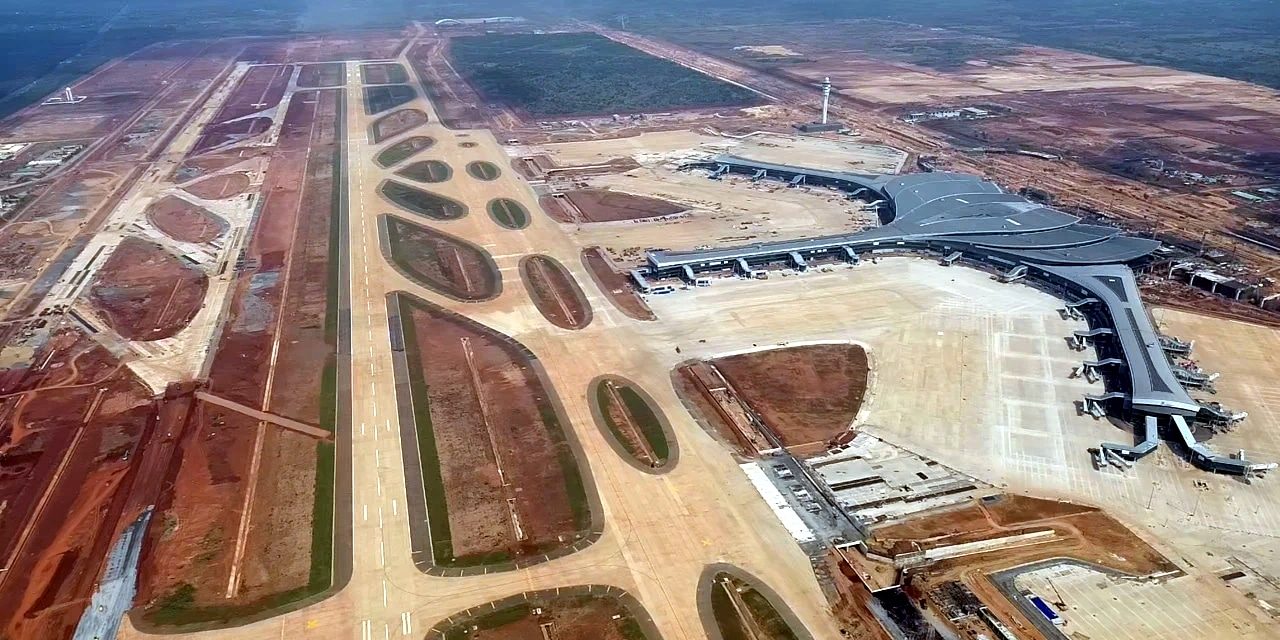
Trabzon New Airport (Trabzon Province, Türkiye/Turkey) has been awarded to a joint venture between Cengiz İnşaat and ASL İnşaat following completion of the main construction tender. The contract was issued by the Ministry of Transport and Infrastructure on 20 December 2025 using a negotiated procurement procedure. The winning bid was valued at TRY 48.199 billion (USD 1.7 billion) and covers the construction of the new airport on reclaimed land.
Seven companies submitted bids for the tender, of which four were accepted as valid under the evaluation process. The project will be delivered by Cengiz İnşaat, a Turkish construction contractor, in partnership with ASL İnşaat, a domestic construction company.
Trabzon New Airport is included in Turkey’s 2026 Public Investment Programme, which provides for total project expenditure of TRY 68.98 billion (USD 2.4 billion) across the 2022–2029 period.


Saudi Logistics Services Company has signed a SAR 232.9 million (USD 62 million) contract to advance the second phase of its cargo ground handling expansion at King Abdulaziz International Airport. The project covers Phase 2 of SAL’s Jeddah Station development and includes new construction, upgrades to existing buildings, supporting facilities and utility works, delivered in line with approved technical plans.
The construction contract has been awarded to Contracting and Construction Enterprises Company Ltd and forms part of SAL’s wider programme to increase cargo handling capacity and strengthen operational reliability at Saudi Arabia’s main western gateway.
Construction is scheduled for completion in the third quarter of 2028.


Perth Airport (Australia) has appointed Bechtel, a global engineering and construction company, to support the implementation phase of its long-term aviation infrastructure programme. Bechtel was first engaged in early 2025 as capital portfolio partner to establish governance structures and programme management systems, and will now form an integrated team with Perth Airport to oversee design and construction works within an operating airport environment. The scope covers multiple projects, including a new runway, new terminal facilities, two multi-storey car parks, road network upgrades and the development of an on-site hotel.
In parallel, works are underway within existing terminals, including an expansion of Terminal 2, redevelopment of retail and food and beverage areas, and the installation of 95 additional self-service check-in kiosks in Terminal 1. The airport has stated that its long-term planning is based on forecasts of up to 30 million passengers annually by 2046.

Management, Ownership, and Finance (MGT)

Asia Pacific

PAKISTAN
Pakistan’s federal government is preparing to fast-track the outsourcing of Islamabad International Airport through an open and competitive concession process during 2026, following the privatisation of Pakistan International Airlines. The Privatisation Commission told the Senate Standing Committee on Privatisation that the airport has been placed on an accelerated timetable, with a summary to appoint a financial adviser due to be submitted to the Cabinet Committee on Privatisation and the federal cabinet. The Asian Development Bank has expressed interest in acting as adviser, citing experience in comparable international airport concession transactions.
Authorities confirmed that earlier government-to-government discussions with the United Arab Emirates, Türkiye and Saudi Arabia did not progress after the United Arab Emirates was unable to nominate a qualified airport operating entity. As no lease, management or operating agreement was finalised, the government formally ended the bilateral approach and moved to open bidding.
Under the revised framework, Islamabad International Airport will be offered through a long-term commercial concession open to both domestic and international investors on equal terms, with selection based on economic and procedural criteria rather than diplomatic arrangements. Officials said the lack of an identified operator under the government-to-government model contributed directly to the decision to accelerate the process.
Karachi Airport (Sindh, Pakistan) and Lahore Airport (Punjab, Pakistan) are expected to follow Islamabad under later phases of the fast-track airport outsourcing programme. Existing airport staff are expected to be redeployed to smaller regional airports once transactions are completed, while the Civil Aviation Authority will retain regulatory responsibilities.
Islamabad International Airport, which opened in 2018, has faced operational and financial challenges since entering service and now forms part of a broader review of national airport operating models. Further discussions on airport concessions and private-sector participation took place on 21 January 2026 alongside the World Economic Forum in Davos, where international airport services companies, including Menzies Aviation, expressed interest in Pakistan’s airport and logistics sector.


THAILAND
Implementation of the U-Tapao Airport and Eastern Aviation City project resumed on 29 January 2026 following the signing of a contract management agreement. The agreement was concluded between U-Tapao International Aviation, the private concessionaire responsible for the development, and the Eastern Economic Corridor Policy Committee Office, the government body overseeing the Eastern Economic Corridor programme.
The project, structured as a public–private partnership, covers the development of U-Tapao Airport and the surrounding Eastern Aviation City within the Eastern Economic Corridor. The signing formally restarts project execution after several years of delays.
Under the agreement, U-Tapao International Aviation agreed to waive certain contractual conditions related to the construction plan and the high-speed rail link connecting three airports, which had previously affected progress. The waiver allows initial works to proceed independently of the rail project.
The Eastern Economic Corridor Policy Committee Office stated that a Notice to Proceed is expected to be issued within February 2026, enabling the formal project period to commence. Following issuance, both parties will define mitigation measures and submit them to the policy committee in accordance with legal procedures.
Initial development planned for later in 2026 includes a real estate project covering approximately 6,500 rai (about 1,040 hectares), intended to support early-stage investment activity within the Airport City area. Subsequent phases will focus on the construction of core infrastructure and the Airport City components designed to increase passenger volumes and attract private investment.
Separately, the Royal Thai Navy is constructing a second runway and associated taxiways at the airport, with completion scheduled for November 2028. Utility systems, including water supply, wastewater treatment, electricity and aviation fuel infrastructure, are being developed in parallel with the airport expansion programme.


INDONESIA
The West Java Provincial Council has urged the provincial government to adopt measures to prevent further decline in the asset value of Kertajati International Airport (West Java). Kertajati International Airport was developed as the main aviation gateway for West Java, located in Majalengka Regency, and was intended to serve the Greater Bandung metropolitan area following capacity constraints at Husein Sastranegara Airport in Bandung. The airport opened for commercial operations in 2018 but has struggled to attract sustained airline services and passenger volumes due to its distance from Bandung and limited surface transport connectivity.
The airport is operated by BIJB, a provincially owned enterprise, and has not reached full operational capacity. It continues to rely on annual operating subsidies from the provincial budget to cover costs, with legislators stating that the airport places ongoing pressure on regional finances.
The council has proposed several options for discussion with the central government, including a potential asset exchange between Kertajati International Airport and Husein Sastranegara Airport (Bandung, West Java, Indonesia). Another option under review is the conversion of the airport for military use or the transfer of full business management to the central government through PT Angkasa Pura, the state-owned airport operator.
Council representatives said coordination between central, provincial and municipal authorities would be required to determine future use of the airport, as authority over flight route allocation rests with the central government. The council also confirmed that a broader review of all provincially owned enterprises in West Java is underway to assess financial performance and long-term economic sustainability.


THE PHILIPPINES
Officials from the Bases Conversion and Development Authority presented investment-ready projects linked to Clark Freeport Zone (Pampanga) to Japanese companies during a project pitching forum held on 30 January 2026. The Bases Conversion and Development Authority, a Philippine government agency responsible for converting former military bases into civilian economic zones, organised the forum with its subsidiary, Clark International Airport Corporation, which manages Clark International Airport.
The event brought together Japanese firms with interests in infrastructure, aviation, industrial parks, energy transition and public–private partnerships, with discussions focused on potential investments within Clark and other areas administered by the authority.
Clark International Airport Corporation outlined proposed developments within the Clark Aviation Capital, a long-term planning area surrounding the airport, intended to support aviation-related and commercial activities.
Projects presented included the Clark National Food Hub, the Urban Renewal and Heritage Conservation Program, the Clark International Aviation Campus and the Clark Pharmaceutical Hub, which were described as available for long-term private sector participation.
Participating Japanese companies were identified as operating in sectors including water and wastewater treatment, smart transportation systems, industrial park development, energy and agriculture, which align with the development areas being promoted at Clark.

Multi-Country Airport Investors & Operators

JPMorgan has updated its outlook on several European infrastructure operators, placing Fraport and Getlink on positive catalyst watch while revising its stance on Zurich Airport. Fraport, the operator of Frankfurt Airport (Hesse, Germany) and a global airport investor, was added to the positive catalyst watch ahead of fourth-quarter results. The bank expects updated guidance on free cash flow delivery, capital expenditure and dividends, with projections supported by traffic growth and slower increases in operating costs.
Zurich Airport, the operator of Zurich Airport (Zurich, Switzerland), was downgraded to Neutral following an increase in long-term capital expenditure guidance to CHF 350–400 million per year, equivalent to approximately USD 390–450 million. The bank also cited expectations of tariff reductions, which it expects to weigh on free cash flow despite continued passenger traffic growth.


Shareholders of Grupo Aeroportuario del Sureste approved the acquisition of a portfolio of 20 airports across South America and the Caribbean at a general meeting held in Mexico City on 26 January 2026. Grupo Aeroportuario del Sureste, a Mexican airport operator that manages several airports in Mexico, Puerto Rico and Colombia, received authorisation to contract debt and execute the agreements required to complete the transaction. The company expects financial close during the first half of 2026.
The transaction involves the purchase of 100 % of Companhia de Participações em Concessões, a subsidiary of Brazilian infrastructure group Motiva. The equity value of the deal is BRL 5.0 billion, equivalent to USD 946 million, while the implied enterprise value is BRL 13.7 billion, or USD 2.593 billion.
Companhia de Participações em Concessões holds shareholdings in 20 concessioned airports located in Brazil, Ecuador, Costa Rica and Curaçao. The portfolio includes Quito International Airport (Pichincha, Ecuador), Juan Santamaría International Airport (Alajuela, Costa Rica) and Curaçao International Airport (Curaçao, Netherlands).
In Brazil, the assets include Belo Horizonte Confins International Airport (Minas Gerais, Brazil), Pampulha Airport, and airports grouped under the country’s South and Central concession blocks.

Names

Jersey Airport (Channel Islands, United Kingdom) has appointed Dale Reeson as its new operations director, with the role commencing at the end of January 2026. Reeson joins from London Heathrow Airport, where he has worked for more than 25 years, progressing from air traffic controller to director of operations. His appointment follows the resignation of the previous operations director in July 2025, with the recruitment process overseen by the Harbour and Airport Authority and supported by the Jersey Appointments Commission.


A leadership change took effect at Münster/Osnabrück Airport (North Rhine-Westphalia, Germany) on 1 January 2026 following the appointment of a new managing director. Andrés Heinemann assumed the role after being appointed by the shareholders of FMO Flughafen Münster/Osnabrück GmbH as part of a planned succession process. He succeeded Prof. Dr Rainer Schwarz, who stepped down at the end of 2025 after leading the airport since early 2017.
The appointment followed a structured selection process supported by an external executive search firm, with the supervisory bodies unanimously selecting Mr Heinemann after a multi-stage evaluation.
The decision confirmed the choice of an internal candidate with long-standing experience at the airport.
Mr Heinemann has worked at Münster/Osnabrück Airport since 1996 in a range of senior roles.
In recent years, he served as head of marketing and communications, where he was involved in traffic development activities and the airport’s regional communications strategy. He holds a degree in business administration from the University of Osnabrück and brings more than two decades of experience within the German aviation sector.


Fraport, a German airport operator, announced on 30 January 2026 that a change in executive leadership will take place at Ljubljana Airport (Slovenia). Jürgen Deischl will assume the role of chief executive of Fraport Slovenija, the company operating Ljubljana Airport, with effect from 1 March 2026. He will replace Babett Stapel, who has held the position since October 2021.
Mr Deischl holds a degree in aeronautical engineering and has previously worked in aviation roles at Lufthansa and Condor before joining Fraport in 2015.
He currently serves as Vice President for Aviation Development within the Fraport Group.
During her tenure, Ms Stapel oversaw airport operations during the post-pandemic period and following the collapse of Adria Airways, the former national carrier of Slovenia.
She will move to Fraport’s headquarters in Frankfurt, where she will lead the group’s retail and real estate business unit.
Fraport stated that a structured handover process is underway to support continuity in strategic and operational management at Ljubljana Airport.


The development of New Tashkent International Airport in the Tashkent region (Uzbekistan) has entered a new phase following the appointment of a Turkish aviation executive to its project office. Berk Albayrak, an aviation infrastructure executive from Turkey, has been appointed General Manager of the project office representing the private partner, with the appointment announced on his LinkedIn page. He previously served as Chief Executive Officer of Sabiha Gökçen Airport in Istanbul and as Project Director for Kuwait’s new international airport, a project valued at USD 5.5 billion.
New Tashkent International Airport is being developed under a public–private partnership involving Vision Invest, a Saudi Arabian investment company, Sojitz, a Japanese trading and investment group, and Incheon International Airport Corporation, the state-owned operator of South Korea’s main international airport.
The airport is being constructed across 1,300 hectares in the Urta Chirchik and Kuyichirchik districts of the Tashkent region, with construction formally launched in October 2025. Once completed, the facility is planned to handle up to 20 million passengers and 129,000 tonnes of cargo annually and will be connected to major highways and high-speed rail infrastructure.


A leadership change took place at Plattsburgh International Airport (New York, United States) in January 2026 following the appointment of a new airport director. Patrick Sharrow was appointed to the role by the Clinton County Legislature, succeeding Chris Kreig, who retired after serving as airport director. Mr Sharrow previously worked at Burlington International Airport and served as airport director at Ogdensburg International Airport.
Upon taking up the position, his initial focus is on familiarisation with airport operations. Future areas under consideration include air service development, expansion of destinations and potential international flight operations at the airport.


James Lawrence has been appointed chair of the Metropolitan Airports Commission, the public body responsible for Minneapolis–St. Paul International Airport (Minnesota, United States) and six general aviation airports in the Twin Cities region. The appointment was made by Minnesota Governor Tim Walz, with Lawrence assuming the role on 21 January 2026, succeeding Rick King, who retired in November 2025. Lawrence has served on the commission since 2021 and previously chaired its Planning, Development and Environment Committee while acting as vice chair of the 15-member board.
The Metropolitan Airports Commission oversees one of the largest airport systems in the United States, including Minneapolis–St. Paul International Airport, which handled 37.2 million passengers in 2024, is served by 15 airlines with nonstop routes to 166 destinations. The wider system also includes six reliever airports located within 35 miles of Minneapolis and St. Paul, which together supported more than 714,000 aircraft operations during 2024.


Valley International Airport (Texas, United States) is extending its search for a permanent aviation director as the recruitment process enters its fifth month. The airport’s board of directors plans to appoint an external executive search firm after the city commission declined to approve the board’s preferred candidate and voted to prolong the recruitment process. The board had previously conducted a national search, receiving 25 applications and interviewing four candidates, but the appointment now requires city commission consent following a charter amendment approved by voters in November 2024.
The vacancy follows the early retirement of the long-serving aviation director in August 2025, with an interim director appointed in November 2025 while the board aims to conclude the expanded recruitment process by April 2026.


Southwest Florida International Airport (Florida, United States) and Page Field will be supported by a new senior appointment within the airport operator’s executive structure. The Lee County Port Authority, the public agency responsible for operating both airports, has appointed Steven Cornell as deputy executive director and chief development officer. In this role, he will oversee engineering and construction, planning and environmental compliance, and capital programme development across the two facilities.
Cornell brings more than 40 years of experience in airport planning, design and capital delivery, most recently serving as principal of SSC Advisors LLC, where he provided advisory services for airport development programmes. His previous work includes projects at airports in San Diego, Houston and Orlando, as well as international assignments in South Korea and Qatar.
He holds a bachelor’s degree in civil engineering from the University of South Florida and is licensed as a professional engineer in the state of Florida.


Aruba Airport has appointed Jonny Andersen as its new chief executive officer following a vacancy that has been in place since mid-2024. The position became vacant after the departure of Joost Meijs, who led the airport for five years, with former director James Fazio serving as interim chief executive during the transition period. Andersen joins Aruba Airport after spending the past two years as chief executive of Curaçao Airport.
His previous experience includes management roles with Avinor, the Norwegian state-owned airport operator, as well as positions at Jomo Kenyatta International Airport in Nairobi and with airlines including airBaltic and Widerøe.


Auckland Airport (New Zealand) appointed a new non-executive director on 30 January 2026 following changes to its board composition. Sean Donohue joined the board with effect from that date, bringing previous executive experience from major international aviation organisations. He served as chief executive of Dallas Fort Worth International Airport from 2013 to 2025 and previously held senior roles at Virgin Australia and United Airlines.
Mr Donohue is currently a non-executive director of Atmos Energy Corporation, a US-based natural gas distribution company.
During 2025, he completed terms as co-chair of the World Economic Forum’s Aviation and Aerospace Governors Committee and as a member of the executive committee of the World Travel and Tourism Council.
His appointment follows the retirement of Christine Spring, who had served as a director since 2014.
Shareholders will vote on the appointment at the airport company’s annual meeting scheduled for 22 October 2026.


Sani Sener, a former senior executive of TAV Airports, was arrested on 27 January 2026 at Lyon Saint-Exupéry Airport (France) under an international arrest warrant issued by Tunisia. Sener previously served as chief executive of TAV Airports, a Turkish airport operating company, before resigning from the role in 2022. At the time of the arrest, he remained chairman and chief executive of Sera Group, one of the shareholders in TAV Airports.
The arrest took place at the airport in Colombier-Saugnieu while Mr Sener was travelling internationally.
His legal representatives stated that discussions were underway between Turkish and French authorities regarding the case.
Groupe ADP, a French airport operator which holds a 46.12% shareholding in TAV Airports, declined to comment on the matter. TAV Airports operates 14 airports across seven countries, including facilities in Türkiye, Tunisia, Kazakhstan and Croatia, and its activities are consolidated within Groupe ADP’s financial accounts.

Get full access to MAI

The above articles are just a small sample of the newsletter content published in a customizable package of topical modules twice a month. Also included with every subscription: exclusive data reports about worldwide airport projects, capacities, and ownership, which are updated throughout the year.

Please click the button below to take advantage of a free, 2-month trial. Please type "trial" in the user instructions window.